
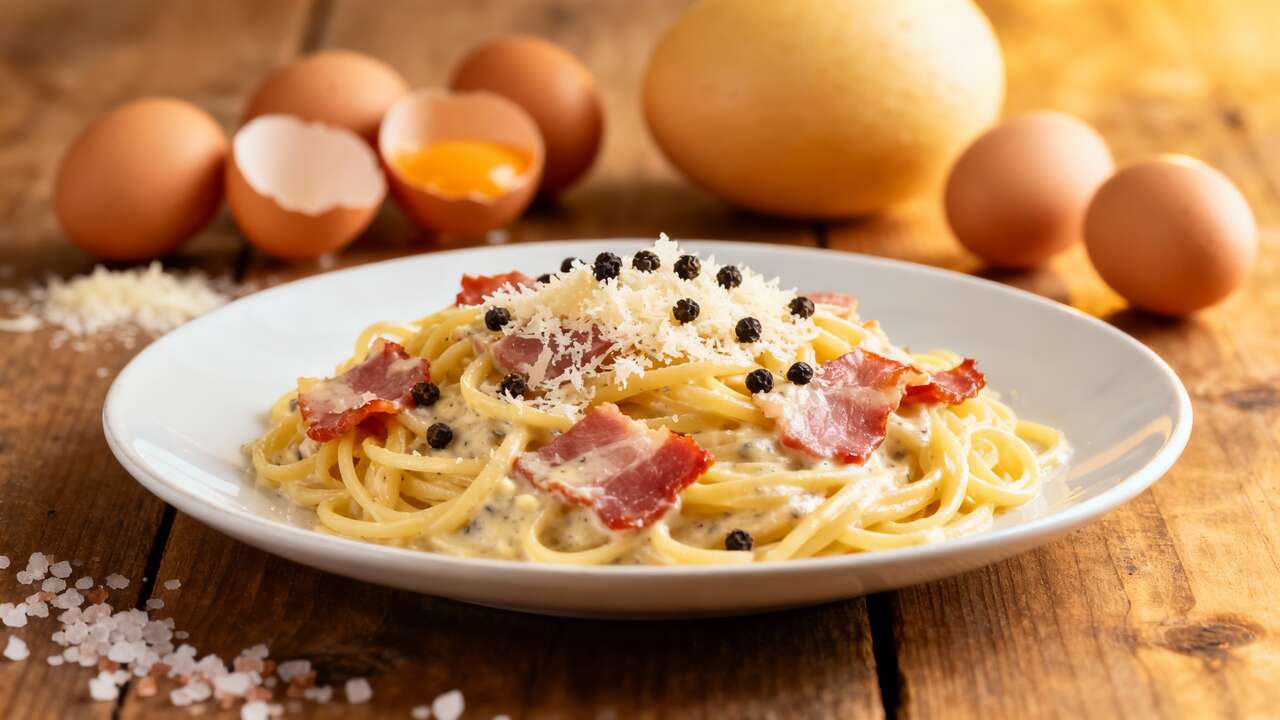

Forget everything you thought you knew about carbonara. Push aside those memories of heavy, cream-laden sauces that coat your palate like a velvet blanket dipped in cement. Today, we embark on a culinary investigation, a journey to the heart of Rome to uncover a truth that has been whispered among Italian nonnas for generations: true, authentic carbonara contains no cream. Not a single drop.
The secret to its otherworldly creaminess, that silky, clinging sauce that so many restaurants try to replicate with dairy shortcuts, lies not in a carton, but in a technique. It’s a beautiful, simple alchemy involving three key elements: the rich fat rendered from cured pork, the golden yolks of fresh eggs, and the starchy, magical water the pasta was cooked in. It’s a dance of temperature and timing, a lesson in culinary finesse that, once mastered, will elevate your pasta nights from simple sustenance to a transcendent experience. This isn’t just a recipe; it’s a rite of passage. Are you ready to unlock the secret? Let’s cook.
20 minutes
15 minutes
moyen
€€
Ingredients
Utensils
Preparation
Step 1
Begin by preparing your holy trinity of flavor. First, the guanciale. Guanciale is cured pork jowl, and its high fat content is non-negotiable for authentic carbonara. Slice it into small strips or cubes, about a quarter-inch thick. Next, tackle the Pecorino Romano. Using a microplane grater, grate the cheese into a fine, fluffy pile; this is crucial for a smooth, non-clumpy sauce. Finally, in a medium-sized mixing bowl, combine the 4 egg yolks and the 1 whole egg. The yolks provide richness and color, while the single white helps the sauce bind to the pasta. Whisk them gently, just enough to break them up.
Step 2
Into the bowl with the eggs, add about three-quarters of your finely grated Pecorino Romano and a very generous amount of freshly, coarsely ground black pepper. Don’t be shy here; carbonara should have a noticeable peppery kick. Whisk everything together until you have a thick, paste-like consistency. This glorious, golden sludge is the heart of your future sauce. Set it aside for now.
Step 3
Place a large, heavy-bottomed skillet over medium-low heat. Add the sliced guanciale to the cold pan. Cooking it slowly from a cold start allows the fat to render, which simply means to melt out slowly and separate from the meat, leaving you with incredibly crispy pork pieces and a pool of liquid gold. Stir occasionally for about 10-12 minutes, until the guanciale is golden brown and crisp. Using a slotted spoon, remove the crispy bits to a small plate, but leave all that precious rendered fat in the skillet. Turn off the heat under the skillet for now.
Step 4
While the guanciale is rendering, bring a large pot of water to a rolling boil. Once boiling, add a generous amount of coarse sea salt. The water should taste like the ocean. Add the pasta and cook according to package directions, but aim for very *al dente*—about 1-2 minutes less than the suggested time. The pasta will finish cooking in the sauce. The most important part of this step is the pasta water itself. It’s full of starch, which will act as the emulsifier and thickener for our sauce. It is the key to the creaminess.
Step 5
This is where the magic happens, and timing is everything, so read this step fully before you begin. Just before the pasta is done, scoop out and reserve about 1.5 cups of the starchy pasta water. Now, using tongs or a pasta spider, transfer the cooked pasta directly from the pot into the skillet with the rendered guanciale fat. Do not drain it in a colander; you want some of that starchy water to cling to the noodles. The skillet should still be off the heat.
Step 6
Now, to avoid making scrambled eggs, we must temper the egg mixture. Tempering is the process of slowly raising the temperature of a sensitive ingredient to prevent it from curdling. Add two tablespoons of the hot pasta water to your egg and cheese mixture and whisk vigorously. This gently warms the eggs. Immediately pour the tempered egg mixture over the hot pasta in the skillet. Add a splash (about 1/4 cup) of the reserved pasta water. Using your tongs, toss everything together quickly and energetically. The residual heat from the pasta and the fat will cook the eggs gently, while the starchy water and vigorous tossing action will create a beautiful, glossy, and perfectly creamy sauce that coats every single piece of pasta. If the sauce seems too thick, add another splash of pasta water until it reaches your desired consistency. Finally, toss in most of the crispy guanciale, saving some for garnish. Taste and adjust for pepper if needed. It’s unlikely you’ll need more salt, as the guanciale and Pecorino are quite salty.
Step 7
Serve immediately. Carbonara waits for no one! The sauce will continue to thicken as it sits, so speed is of the essence. Divide the pasta among your warmed bowls, twirling it with tongs to create an elegant nest. Top each serving with the remaining crispy guanciale, an extra sprinkle of Pecorino Romano, and one last, generous grind of black pepper.

Chef’s tip
The enemy of a perfect carbonara is excessive heat. The biggest mistake you can make is combining the egg mixture with the pasta over a direct heat source. This will instantly scramble the eggs, leaving you with a grainy, disappointing mess. Your mantra should be: ‘off the heat’. The residual heat of the freshly cooked pasta and the rendered fat is more than enough to cook the egg sauce to a safe and creamy consistency. Trust the process, work quickly, and you will be rewarded with a sauce of unparalleled silkiness.
Wine Pairing: A Roman Classic
To honor its Roman roots, pair this dish with a wine from the Lazio region. A crisp, dry white like a Frascati Superiore is a classic choice, its bright acidity cutting through the richness of the guanciale and egg. If you prefer red, opt for something with bright cherry notes and good acidity that won’t overpower the dish, such as a Chianti Classico from neighboring Tuscany. The wine should cleanse the palate, preparing you for the next delicious bite.
The Murky Origins of a Beloved DishThe history of pasta alla carbonara is as rich and debated as the dish itself. While many believe it’s an age-old Roman classic, its first documented appearances are surprisingly recent, dating only to the post-World War II era. One popular theory suggests the dish was created to feed American soldiers stationed in Italy, using their rations of eggs and bacon as an inspiration for a local pasta dish. The name itself, derived from ‘carbone’ (coal), fuels another theory linking it to Italian charcoal workers (carbonari), who might have prepared the dish over a fire. Whatever its true origin, carbonara has firmly established itself as one of the four quintessential pasta dishes of Rome, a testament to the power of simple, high-quality ingredients.
- This Dried Fruit Improves Heart Health, Experts Say - 13 November 2025
- 3 Perennials You Should Divide in Autumn for a Healthier Garden Next Year - 13 November 2025
- This Simple Fruit on the Table Naturally Repels Gnats - 12 November 2025