
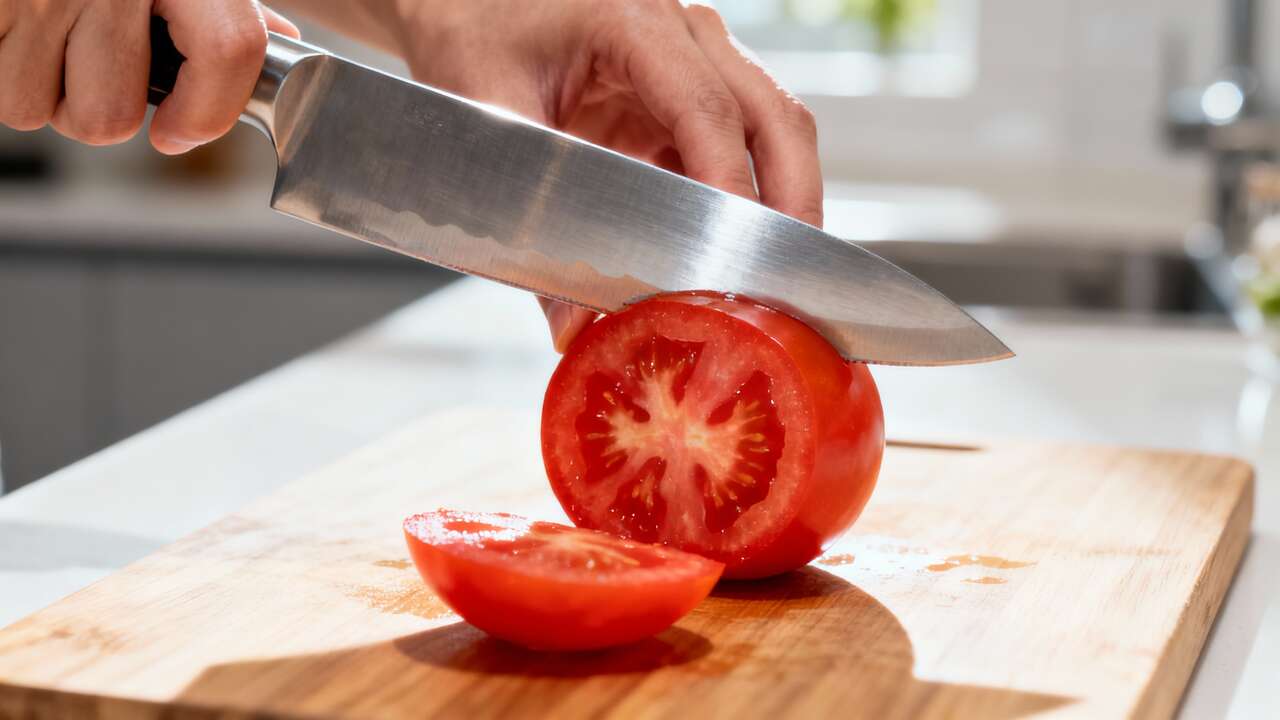

The humble tomato, a cornerstone of countless culinary creations, presents a unique challenge in the kitchen. Its taut, smooth skin and soft, delicate interior can foil even the most confident home cook, often resulting in a pulpy, watery mess rather than clean, uniform slices. The culprit is almost always the same: a dull knife. This is not merely a matter of inconvenience; using the wrong tool for this task compromises the food’s quality, presentation, and can introduce unnecessary risks. Understanding the mechanics behind a clean cut is the first step toward mastering this fundamental kitchen skill.
why avoid a dull knife for tomatoes
the science of the slice
The effectiveness of a knife is a matter of physics. A sharp blade concentrates all the downward pressure onto an incredibly fine edge, allowing it to sever the tomato’s skin and flesh fibers with minimal force. It slices cleanly through the cellular structure. In contrast, a dull knife has a rounded, worn edge that spreads the pressure over a wider surface area. Instead of cutting, it crushes. The force applied is not enough to break the skin cleanly, so it tears and mashes the delicate pulp beneath, releasing excess water and enzymes that degrade the tomato’s integrity.
preserving flavor and texture
When a tomato’s cells are crushed rather than sliced, the result is a significant loss of both flavor and texture. The watery juice that pools on the cutting board carries away much of the fruit’s natural sugars and acids, leading to a bland taste. The remaining flesh becomes mealy and soft, lacking the firm, pleasing bite a properly sliced tomato should have. A clean cut with a sharp knife preserves the cellular walls, keeping the juice and flavor locked inside each slice until it reaches the palate.
visual appeal in culinary presentation
Presentation is a critical component of a satisfying meal. Mangled, misshapen tomato pieces can make a fresh salad look sloppy or a sandwich soggy and unappetizing. Whether you are creating a classic caprese salad, topping a burger, or preparing a delicate garnish, perfectly uniform slices elevate the dish. A sharp knife gives you the control needed to produce aesthetically pleasing cuts that hold their shape, making your food look as good as it tastes. The difference between an amateur and a professional-looking dish often comes down to this simple detail.
The consequences of a dull blade extend beyond a poorly prepared tomato; they introduce tangible dangers into the kitchen environment.
the risks of a dull knife in the kitchen
increased risk of injury
It is a dangerous misconception that a sharper knife is a more dangerous knife. The opposite is true. A dull blade requires significantly more downward force to cut through food. When slicing something with a tough, smooth skin like a tomato, this extra pressure makes it far more likely for the knife to slip off the surface and cause a serious injury to the hand holding the food. A sharp knife, on the other hand, bites into the skin with very little pressure, giving the user greater control and stability throughout the cut.
statistical evidence on kitchen accidents
Lacerations are among the most common household injuries, with kitchen knives being a primary source. While precise data distinguishing between sharp and dull blades is not always tracked, culinary and emergency room professionals consistently report that accidents are more frequently associated with loss of control, which is a hallmark of using a dull knife. The force required for a dull blade can lead to more severe injuries when a slip does occur.
| Knife Condition | Required Force | Risk of Slipping | Potential Injury Severity |
|---|---|---|---|
| Sharp Knife | Low | Low | Lower |
| Dull Knife | High | High | Higher |
damage to kitchen equipment
The excessive force used with a dull knife doesn’t just threaten your fingers; it can also harm your kitchen tools. Pressing down hard can gouge and scar your cutting board, creating crevices where bacteria can grow. Furthermore, if the knife slips off the tomato and strikes the counter or another hard object, it can chip or damage the blade itself, making an already ineffective tool even worse. Proper technique with a sharp knife protects both the user and the equipment.
Understanding these risks makes it clear that the solution is not just to have a sharp knife, but to select the right type of knife specifically suited for the task.
how to choose the right knife for slicing tomatoes
the serrated edge advantage
For tomatoes, a serrated knife is often the ideal tool. The small, pointed teeth on the blade act like a saw, gripping and piercing the tomato’s tough skin with ease. This allows you to slice through the tomato using a gentle sawing motion without applying much downward pressure, which is the primary cause of crushing. This design makes it the most forgiving and effective option, especially if your straight-edged knives are not perfectly sharpened. A dedicated tomato knife or even a common bread knife works exceptionally well.
evaluating knife options
While a serrated knife is a top choice, other sharp knives can also perform well. The key is choosing a blade that suits the size of the tomato and the type of cut you desire. A very sharp, thin-bladed chef’s knife can work for large beefsteak tomatoes, while a paring knife offers precision for smaller tasks like coring.
| Knife Type | Best Use Case for Tomatoes | Pros | Cons |
|---|---|---|---|
| Tomato Knife (Serrated) | Slicing all tomato types | Grips skin easily; prevents crushing | Less versatile for other tasks |
| Paring Knife (Sharp) | Coring; slicing small tomatoes | High precision and control | Too small for large tomatoes |
| Chef’s Knife (Sharp) | Dicing; slicing large tomatoes | Versatile kitchen workhorse | Requires perfect sharpness to avoid slipping |
material matters: blade composition
The material of the blade is also a factor. Tomatoes are highly acidic, which can corrode and dull the edge of some standard stainless steel knives over time. Look for knives made from high-carbon stainless steel, which is more resistant to rust and corrosion and holds a sharp edge for longer. Ceramic knives are another excellent option; they are chemically inert, meaning they won’t react with the tomato’s acids, and they stay exceptionally sharp for a very long time, though they can be more brittle.
With the ideal knife in hand, applying the correct method is the final piece of the puzzle for achieving flawless, mess-free results.
techniques for slicing a tomato without mess
preparation is paramount
Success begins before the knife ever touches the tomato. Following a few simple preparatory steps will set you up for a clean and safe cutting experience.
- Select the right tomato: Choose tomatoes that are ripe for flavor but still firm to the touch. Overly soft or mealy tomatoes are difficult to cut cleanly, no matter how sharp your knife is. Varieties like roma or beefsteak are excellent choices.
- Wash and dry thoroughly: Clean the tomato under cool water to remove any dirt. Crucially, dry it completely with a paper towel. A wet, slippery surface is a major safety hazard.
- Create a stable base: If the tomato is round and wobbly, create a flat, stable base by slicing a very thin piece off the bottom. This will prevent it from rolling as you cut.
- Remove the core: Use the tip of a paring knife to cut a small cone-shaped piece out of the top to remove the stem and tough core.
mastering the cutting motion
The way you move the knife is critical. Avoid chopping or pushing straight down. Instead, let the knife do the work. For a straight-edged knife, place the tip of the blade on the tomato and pull the knife back toward you in one long, smooth motion. For a serrated knife, use a gentle back-and-forth sawing motion with very little downward pressure. This fluid movement allows the blade to slice through the skin and flesh cleanly rather than tearing it.
common slicing styles for different dishes
The intended use of the tomato will dictate the best way to cut it. Having a few basic styles in your repertoire will cover most culinary needs.
- Slices (Rounds): Ideal for sandwiches, burgers, and caprese salads. Lay the tomato on its side and cut crosswise into slices of your desired thickness.
- Wedges: Perfect for green salads and platters. Cut the tomato in half from top to bottom, then cut each half into two or three wedges.
- Dices: Essential for salsas, bruschetta, and sauces. Slice the tomato, stack the slices, cut them into strips (julienne), and then cut the strips crosswise into a small dice.
After achieving these perfect cuts, the next step is to ensure they stay fresh and vibrant until they are ready to be served.
tips for preserving tomato freshness after slicing
the enemies of a sliced tomato: air and heat
Once a tomato is cut, its two greatest enemies are exposure to air and warm temperatures. Oxidation begins immediately on the cut surfaces, causing the flesh to break down and lose its flavor and nutritional value. Heat accelerates this process, encouraging bacterial growth and spoilage. The goal of proper storage is to minimize the impact of both these factors, preserving the tomato’s just-cut quality for as long as possible.
proper storage methods
If you must slice tomatoes ahead of time, a few best practices can help maintain their freshness. The key is to create a barrier against air and keep them cool.
- Place the cut tomatoes in a single layer on a plate lined with a paper towel. The paper towel will absorb excess moisture that can make the slices soggy.
- Cover the plate tightly with plastic wrap. For maximum effectiveness, press the plastic wrap directly onto the cut surfaces of the tomatoes to create a seal and prevent air contact.
- Alternatively, store the slices in a shallow, airtight container.
- Refrigerate immediately. Sliced tomatoes should be used within two days for the best flavor and texture.
to salt or not to salt ?
Salting cut tomatoes is a common practice, but it’s important to understand its effect. Salt draws moisture out of the tomato through osmosis. This can be beneficial if you are trying to prevent a sandwich or salad from becoming watery. However, if you are storing the slices for later use, salting them beforehand will cause them to lose their juices and become limp. It is best to salt tomatoes just before serving unless a specific recipe calls for pre-salting to draw out water.
Ultimately, all of these techniques for choosing, cutting, and storing tomatoes are built upon the foundation of a well-maintained tool.
knife maintenance and sharpening for perfect cuts
distinguishing between honing and sharpening
Many people use the terms “honing” and “sharpening” interchangeably, but they are two distinct processes critical for knife care. Honing does not sharpen a knife; it realigns the microscopic edge of the blade, which can get bent or knocked out of alignment with regular use. It should be done frequently, even before each use. Sharpening is the process of grinding away a small amount of steel to create an entirely new, sharp edge. This is done much less frequently, perhaps only a few times a year, depending on knife usage.
tools of the trade
A few key tools are essential for keeping your knives in top condition. Investing in them will pay dividends in performance and safety.
- Honing Steel: A steel or ceramic rod used to hone the blade’s edge. Regular use keeps a sharp knife performing at its peak between sharpenings.
- Whetstones: Also known as sharpening stones, these offer the most control and produce the best, longest-lasting edge. They come in various grits, from coarse for repairing a damaged edge to fine for polishing it. They require practice but are the preferred method for enthusiasts.
- Manual or Electric Sharpeners: These devices offer convenience and are easier to use than whetstones. They have pre-set angles that guide the blade, making them a good option for beginners, though they can be more aggressive and remove more metal than necessary.
best practices for knife care
Beyond sharpening, daily care habits are essential for prolonging the life and performance of your knives.
- Hand wash only: Never put a good knife in the dishwasher. The high heat and harsh detergents can damage the handle and dull the blade, and the knife can get knocked against other items.
- Dry immediately: After washing, dry your knife thoroughly with a towel to prevent rust and water spots, especially with high-carbon steel blades.
- Store properly: Tossing a knife into a drawer with other utensils is the fastest way to dull and chip the blade. Use a wooden knife block, a magnetic wall strip, or individual blade guards to protect the edge.
Treating a simple task like slicing a tomato with care and precision is a hallmark of a thoughtful cook. A dull knife is not just an inconvenience; it’s a detriment to the quality of your food and a risk to your safety. By selecting the right knife, mastering the proper technique, and committing to regular maintenance, you ensure that every cut is clean, efficient, and safe, allowing the fresh, vibrant flavor of the tomato to shine in every dish.

- This Dried Fruit Improves Heart Health, Experts Say - 13 November 2025
- 3 Perennials You Should Divide in Autumn for a Healthier Garden Next Year - 13 November 2025
- This Simple Fruit on the Table Naturally Repels Gnats - 12 November 2025