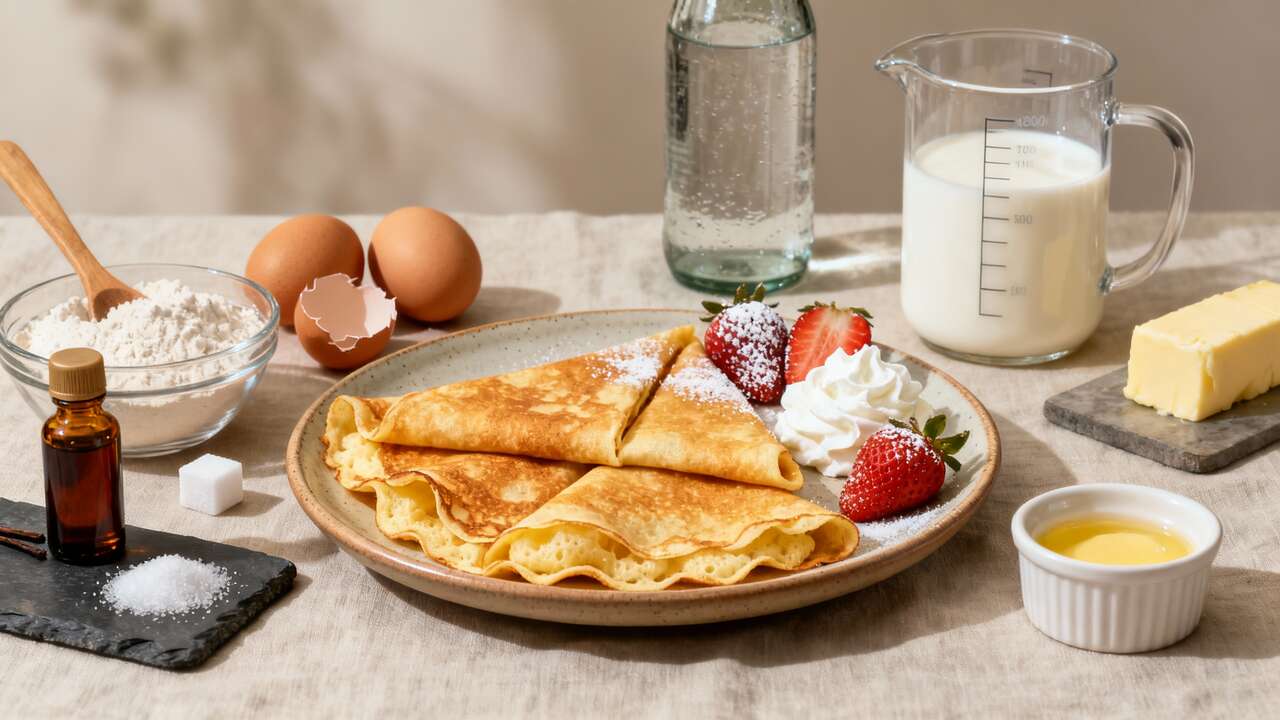

In the hallowed halls of culinary arts, some secrets are whispered from one generation of chefs to the next, simple tricks that elevate a good dish to an unforgettable one. Today, we pull back the curtain on one such secret, a technique that will forever change the way you think about a beloved French classic: the crêpe. Forget the dense, sometimes rubbery pancakes of your past. We are about to introduce a single, unassuming ingredient that infuses crêpes with an ethereal lightness, a delicate fluffiness that feels like biting into a cloud. The secret? Sparkling water.
It sounds almost too simple to be true, but the science is as sound as it is brilliant. The carbonation, those tiny, effervescent bubbles, acts as a powerful leavening agent. When introduced into the batter just before cooking, these bubbles create a microscopic network of air pockets. As the batter hits the hot pan, the heat causes these pockets to expand rapidly, lifting the crêpe and creating a texture that is impossibly airy and tender. This isn’t just a recipe; it’s a lesson in food science, a simple hack that transforms a humble batter into a masterpiece of texture and flavor. Prepare to master the art of the perfect crêpe, a crêpe so light, it practically floats off the plate.
15 minutes
30 minutes
facile
€
Ingredients
Utensils
Preparation
Step 1
Begin by preparing your foundation. In a large mixing bowl, combine the dry ingredients: the all-purpose flour, granulated sugar, and fine sea salt. Use a whisk to stir them together for about 30 seconds. This simple action, known as aerating, not only distributes the ingredients evenly but also helps to lighten the flour, which is the first step toward achieving a delicate final product.
Step 2
Now, create what chefs call a ‘well’ in the center of your dry ingredients. A well is simply a hollowed-out space in the middle of your flour mixture, resembling a crater. This technique prevents lumps by allowing you to incorporate wet and dry ingredients gradually. Crack the four eggs directly into this well, then pour in the whole milk and the vanilla extract. Leave the melted butter and sparkling water aside for now; their time will come.
Step 3
With your whisk, begin mixing from the center of the well outwards. Gently whisk the eggs and milk together first, then slowly start pulling in the flour from the sides of the well. Continue this motion, gradually incorporating more and more flour, until you have a thick but smooth batter. This methodical approach is the key to a perfectly homogenous, lump-free batter. Don’t overmix; stop as soon as the flour is fully incorporated.
Step 4
Once your batter is smooth, it’s time to add the richness. Slowly pour in the 50 grams of cooled, melted butter while whisking continuously. You are creating an emulsion. An emulsion is a mixture of two liquids that normally don’t mix, like fat (the butter) and water (from the milk). Whisking vigorously ensures the butter fat is evenly distributed throughout the batter, which will give your crêpes a wonderfully tender texture and prevent them from sticking to the pan.
Step 5
This next step is perhaps the most crucial and the one most often skipped by home cooks: resting the batter. Cover the bowl with plastic wrap and let it rest at room temperature for at least one hour. You can even refrigerate it for up to 24 hours. This resting period allows the gluten in the flour to relax, resulting in a more tender and less chewy crêpe. It also allows the flour to fully absorb the liquid, improving the overall consistency.
Step 6
Just before you are ready to cook, and not a moment sooner, it’s time for the magic ingredient. Gently pour the cold sparkling water into your rested batter. Do not whisk vigorously. Instead, use a spatula to gently fold the sparkling water in until just combined. You want to preserve as many of those precious bubbles as possible. You should see a light, almost frothy texture develop in the batter.
Step 7
Place your crêpe pan or a non-stick skillet over medium heat. Let it get properly hot. To test if it’s ready, flick a tiny drop of water onto the surface; if it sizzles and evaporates immediately, you’re good to go. Lightly grease the pan with a small knob of butter or a swipe of oil on a paper towel. You only need a very thin coating.
Step 8
Using a ladle, pour about 60 ml (1/4 cup) of batter into the center of the hot pan. Immediately lift the pan and swirl it in a circular motion to spread the batter into a thin, even layer. If you have a crêpe spreader, now is the time to use it for that professional, paper-thin result. Cook for about 60-90 seconds, or until the edges start to look dry and lift away from the pan and the surface appears set.
Step 9
With a thin spatula, carefully lift an edge of the crêpe to check the underside. It should be a beautiful golden-brown. Gently slide the spatula underneath and confidently flip the crêpe over. Cook the second side for another 30-45 seconds; it will cook much faster. Slide the finished crêpe onto a plate. Repeat the process with the remaining batter, stacking the finished crêpes on top of each other. They will stay warm this way.
{ “@context”: “http://schema.org”, “@type”: “Recipe”, “name”: “Sparkling Water in Crêpe Batter? The Secret to Making Them Extra Fluffy”, “image”: “https://queenofshebadenver.com/wp-content/uploads/2025/10/1761828377-sparkling-water-in-crepe-batter-the-secret-to-making-them-extra-fluffy.jpg“, “description”: “In the hallowed halls of culinary arts, some secrets are whispered from one generation of chefs to the next, simple tricks that elevate a good dish to an unforgettable one. Today, we pull back the curtain on one such secret, a technique that will forever change the way you think about a beloved French classic: the crêpe. Forget the dense, sometimes rubbery pancakes of your past. We are about to introduce a single, unassuming ingredient that infuses crêpes with an ethereal lightness, a delicate fluffiness that feels like biting into a cloud. The secret? Sparkling water.It sounds almost too simple to be true, but the science is as sound as it is brilliant. The carbonation, those tiny, effervescent bubbles, acts as a powerful leavening agent. When introduced into the batter just before cooking, these bubbles create a microscopic network of air pockets. As the batter hits the hot pan, the heat causes these pockets to expand rapidly, lifting the crêpe and creating a texture that is impossibly airy and tender. This isn’t just a recipe; it’s a lesson in food science, a simple hack that transforms a humble batter into a masterpiece of texture and flavor. Prepare to master the art of the perfect crêpe, a crêpe so light, it practically floats off the plate.”, “prepTime”: “PT15M”, “cookTime”: “PT30M”, “recipeYield”: 4, “recipeIngredient”: [ “250 grams (approx. 2 cups) all-purpose flour”, “4 large eggs”, “250 milliliters (approx. 1 cup) whole milk”, “250 milliliters (approx. 1 cup) plain sparkling water, cold”, “50 grams (approx. 1/4 cup) unsalted butter, melted and cooled”, “2 tablespoons granulated sugar”, “1 teaspoon pure vanilla extract”, “1/2 teaspoon fine sea salt”, “extra butter or cooking oil for the pan” ], “recipeInstructions”: [ “Begin by preparing your foundation. In a large mixing bowl, combine the dry ingredients: the all-purpose flour, granulated sugar, and fine sea salt. Use a whisk to stir them together for about 30 seconds. This simple action, known as aerating, not only distributes the ingredients evenly but also helps to lighten the flour, which is the first step toward achieving a delicate final product.”, “Now, create what chefs call a ‘well’ in the center of your dry ingredients. A well is simply a hollowed-out space in the middle of your flour mixture, resembling a crater. This technique prevents lumps by allowing you to incorporate wet and dry ingredients gradually. Crack the four eggs directly into this well, then pour in the whole milk and the vanilla extract. Leave the melted butter and sparkling water aside for now; their time will come.”, “With your whisk, begin mixing from the center of the well outwards. Gently whisk the eggs and milk together first, then slowly start pulling in the flour from the sides of the well. Continue this motion, gradually incorporating more and more flour, until you have a thick but smooth batter. This methodical approach is the key to a perfectly homogenous, lump-free batter. Don’t overmix; stop as soon as the flour is fully incorporated.”, “Once your batter is smooth, it’s time to add the richness. Slowly pour in the 50 grams of cooled, melted butter while whisking continuously. You are creating an emulsion. An emulsion is a mixture of two liquids that normally don’t mix, like fat (the butter) and water (from the milk). Whisking vigorously ensures the butter fat is evenly distributed throughout the batter, which will give your crêpes a wonderfully tender texture and prevent them from sticking to the pan.”, “This next step is perhaps the most crucial and the one most often skipped by home cooks: resting the batter. Cover the bowl with plastic wrap and let it rest at room temperature for at least one hour. You can even refrigerate it for up to 24 hours. This resting period allows the gluten in the flour to relax, resulting in a more tender and less chewy crêpe. It also allows the flour to fully absorb the liquid, improving the overall consistency.”, “Just before you are ready to cook, and not a moment sooner, it’s time for the magic ingredient. Gently pour the cold sparkling water into your rested batter. Do not whisk vigorously. Instead, use a spatula to gently fold the sparkling water in until just combined. You want to preserve as many of those precious bubbles as possible. You should see a light, almost frothy texture develop in the batter.”, “Place your crêpe pan or a non-stick skillet over medium heat. Let it get properly hot. To test if it’s ready, flick a tiny drop of water onto the surface; if it sizzles and evaporates immediately, you’re good to go. Lightly grease the pan with a small knob of butter or a swipe of oil on a paper towel. You only need a very thin coating.”, “Using a ladle, pour about 60 ml (1/4 cup) of batter into the center of the hot pan. Immediately lift the pan and swirl it in a circular motion to spread the batter into a thin, even layer. If you have a crêpe spreader, now is the time to use it for that professional, paper-thin result. Cook for about 60-90 seconds, or until the edges start to look dry and lift away from the pan and the surface appears set.”, “With a thin spatula, carefully lift an edge of the crêpe to check the underside. It should be a beautiful golden-brown. Gently slide the spatula underneath and confidently flip the crêpe over. Cook the second side for another 30-45 seconds; it will cook much faster. Slide the finished crêpe onto a plate. Repeat the process with the remaining batter, stacking the finished crêpes on top of each other. They will stay warm this way.” ], “aggregateRating”: { “@type”: “AggregateRating”, “ratingValue”: “4.6”, “reviewCount”: “29” } }
Chef’s tip
For the lightest possible crêpes, ensure your sparkling water is as cold as possible. The temperature shock when the cold bubbles hit the hot pan causes them to expand even more dramatically, creating maximum lift and an incredibly airy texture. Never add the sparkling water until the exact moment you are ready to begin cooking.
Perfect Pairings for Your Fluffy Crêpes
These delicate crêpes call for a beverage that complements their lightness without overpowering them. For a classic French pairing, a dry or ‘brut’ apple cider from Normandy is the perfect choice. Its crisp effervescence and slight tartness cut through the sweetness of any filling beautifully. A light sparkling rosé wine also works wonderfully, its berry notes a delightful match for fruit-filled crêpes. For a non-alcoholic option that feels just as special, consider a high-quality artisanal hot chocolate made with real dark chocolate, or a homemade sparkling raspberry lemonade to echo the bubbly magic of the recipe itself.
The crêpe traces its humble origins to Brittany, a region in the northwest of France. Originally made with buckwheat flour and called ‘galettes’, they were a savory staple for the working class. The sweet, white-flour version we know today evolved over time, becoming a symbol of celebration, particularly during ‘La Chandeleur’ (Candlemas) on February 2nd. Tradition holds that if you can successfully flip a crêpe while holding a coin in your other hand, your family will experience prosperity for the coming year. The addition of sparkling water is a more modern, chef-driven innovation, a perfect example of how culinary tradition continues to evolve through a better understanding of food science.
- This Dried Fruit Improves Heart Health, Experts Say - 13 November 2025
- 3 Perennials You Should Divide in Autumn for a Healthier Garden Next Year - 13 November 2025
- This Simple Fruit on the Table Naturally Repels Gnats - 12 November 2025