
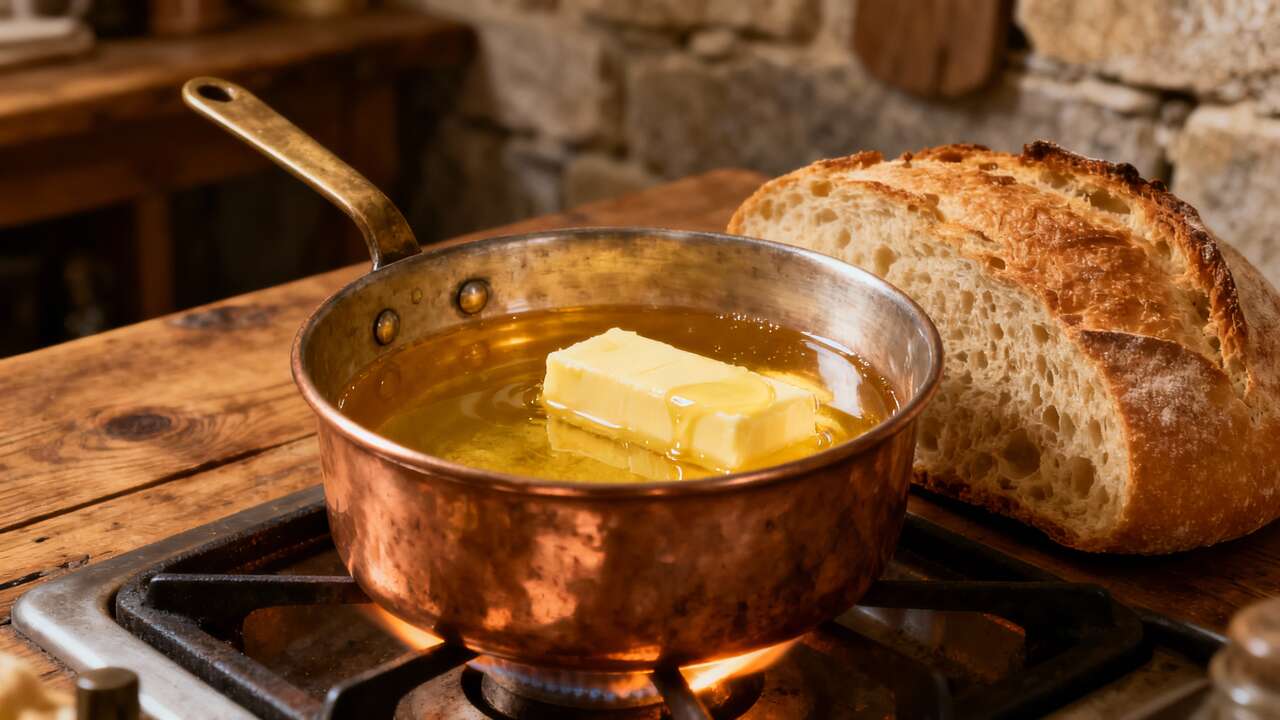

In the world of culinary arts, certain ingredients stand out not for their novelty, but for their timeless utility and transformative power. Clarified butter is one such staple, a seemingly simple product that serves as a cornerstone for countless chefs. Far from being a mere cooking fat, it is a refined tool that unlocks deeper flavors, provides superior cooking performance, and offers a versatility that standard butter cannot match. This golden liquid is the result of a straightforward yet crucial process, turning an everyday ingredient into a chef’s secret weapon for creating rich, flavorful, and perfectly executed dishes.
The Clarification of Butter: a Technique to Master
What is clarified butter ?
Clarified butter is, in essence, pure butterfat. The process of clarification involves gently melting butter to separate its three components: water, milk solids, and butterfat. The water evaporates during heating, while the milk solids, which contain proteins like casein and sugars like lactose, either rise to the top as a foam or sink to the bottom of the pan. Once these elements are removed, what remains is a translucent, golden liquid fat. This purification process not only changes the butter’s composition but also fundamentally alters its culinary properties, making it a more stable and flavorful cooking medium.
The step-by-step process
Creating your own clarified butter is a simple technique that any home cook can master. The key is patience and gentle heat. Following these steps will yield a perfect batch of liquid gold:
- Melt gently: Start by cutting unsalted butter into cubes and placing them in a heavy-bottomed saucepan over low heat. Allowing the butter to melt slowly is crucial to prevent the milk solids from burning.
- Simmer and separate: As the butter melts, it will begin to sputter as the water content evaporates. Soon after, a layer of white foam, which is composed of milk solids, will form on the surface. Let it simmer gently without stirring.
- Skim the solids: Using a fine-mesh spoon or ladle, carefully skim off the foam from the surface and discard it. You will see the clear, golden butterfat underneath.
- Strain for purity: Once the sputtering stops and the liquid is clear, remove the pan from the heat. Carefully pour the butterfat through a fine-mesh sieve lined with several layers of cheesecloth into a clean, heatproof jar. Be sure to leave the remaining milk solids that have settled at the bottom of the pan behind. The final product should be completely clear.
Why the technique matters
Mastering this technique is not just about following a recipe; it is about understanding how to transform an ingredient to suit a specific purpose. By removing the easily scorched milk solids and the water, you create a fat that can withstand much higher temperatures and has a longer shelf life. This control over the ingredient is what separates good cooking from great cooking, allowing for precision in everything from searing a steak to crafting delicate sauces. The simple act of clarification elevates butter from a spread to a high-performance culinary tool.
Having mastered the technique, it becomes important to understand the specific benefits this process unlocks for a cook.
The Advantages of Clarified Butter in Cooking
A higher smoke point
Perhaps the most significant advantage of clarified butter is its remarkably high smoke point. The smoke point is the temperature at which a fat begins to break down and produce visible smoke, imparting a burnt, acrid flavor to food. Regular butter’s milk solids begin to burn at a relatively low temperature. By removing them, the smoke point of clarified butter is raised substantially, making it ideal for high-heat cooking methods such as sautéing, frying, and searing. This allows a chef to achieve a perfect, golden-brown crust on meats or vegetables without the risk of burning.
| Fat Type | Smoke Point (Approximate) |
|---|---|
| Whole Butter | 302-350°F / 150-177°C |
| Clarified Butter | 485°F / 252°C |
| Extra Virgin Olive Oil | 375°F / 191°C |
Enhanced flavor and aroma
The clarification process concentrates the butter’s flavor, resulting in a richer, nuttier, and more intensely buttery taste. Without the milky notes from the solids, the pure fat carries a clean yet profound flavor that can enhance a dish without overpowering it. This makes it a superior choice for applications where a pure butter essence is desired, such as in classic French sauces like Hollandaise or as a finishing drizzle over cooked lobster or steamed asparagus. The aroma itself is more pronounced, adding another sensory layer to the culinary experience.
Lactose-free properties
For individuals with a sensitivity or intolerance to lactose, clarified butter can be an excellent alternative to regular butter. The process of removing the milk solids eliminates almost all of the lactose and casein, the two components most often responsible for dairy-related digestive issues. While trace amounts may remain, it is generally well-tolerated by many who cannot consume other dairy products. This makes it a versatile and inclusive ingredient in a modern kitchen catering to diverse dietary needs.
While the benefits are clear, clarified butter is often mentioned in the same breath as ghee, a similar product with its own distinct characteristics and history.
Differences Between Clarified Butter and Ghee
Cooking time and process
The primary difference between clarified butter and ghee lies in the cooking process. While both involve separating milk solids from butterfat, ghee is cooked for a longer period. After the water has evaporated and the milk solids have separated, the mixture is allowed to continue simmering. This extra time allows the milk solids at the bottom of the pan to toast and caramelize, turning a light brown color. These browned bits infuse the fat with a deeper, nuttier flavor before they are strained out. Clarified butter, by contrast, is removed from the heat as soon as the separation is complete, before the solids begin to brown.
Flavor profile comparison
This difference in process leads to a noticeable distinction in taste and appearance. Clarified butter has a clean, neutral, and purely buttery flavor with a light golden color. It is the essence of butter in its most refined form. Ghee, on the other hand, possesses a more complex, intensely nutty and roasted flavor profile with a darker, amber hue. The choice between the two often comes down to the desired culinary outcome.
| Feature | Clarified Butter | Ghee |
|---|---|---|
| Cooking Time | Shorter; stopped after milk solids separate. | Longer; milk solids are toasted until brown. |
| Flavor | Clean, neutral, buttery. | Deep, nutty, roasted. |
| Color | Light, clear yellow. | Golden to dark amber. |
| Primary Use | Classic French cooking, sautéing, sauces. | South Asian and Middle Eastern cuisines, frying. |
Cultural origins
The distinction also reflects their cultural roots. Clarified butter is a foundational ingredient in classical European, particularly French, cuisine. It is prized for its clarity and neutral flavor, serving as the perfect medium for techniques like sautéing and for creating delicate sauces. Ghee, however, has been a staple in South Asian and Middle Eastern cultures for thousands of years, revered not only for its culinary uses but also in traditional Ayurvedic medicine. Its robust flavor is integral to many iconic dishes from these regions.
Understanding these differences helps a cook decide which fat is appropriate for a specific dish and when its unique properties should be leveraged.
When and Why to Use Clarified Butter
For high-heat cooking
The primary reason to reach for clarified butter is for any cooking that requires high heat. Its high smoke point makes it the ideal choice for achieving a perfect sear on a steak, pan-frying a delicate piece of fish to get crispy skin, or roasting vegetables at high temperatures to encourage caramelization. Unlike regular butter, it will not scorch and turn bitter, ensuring a clean flavor and beautiful golden-brown color every time. It provides the rich flavor of butter with the high-heat tolerance of oils like grapeseed or canola.
In baking applications
In baking, controlling moisture content is often critical to the final texture of the product. Because clarified butter has had its water removed, it can be a valuable ingredient in certain baked goods. It is particularly useful in recipes for shortbread, cookies, or laminated doughs where a tender, crumbly texture is desired. Using pure butterfat instead of whole butter results in a richer flavor and can prevent pastries from becoming tough or soggy from excess water.
As a finishing touch
Clarified butter also shines as a finishing element, where its pure, intense flavor can elevate a completed dish. A simple drizzle can transform ordinary ingredients into something special. Some excellent uses include:
- Drizzling over seafood: A classic pairing with lobster, crab, or scallops to add richness.
- Tossing with vegetables: Coating freshly steamed or roasted vegetables like asparagus or green beans.
- Enhancing popcorn: Using it instead of melted whole butter for a richer flavor that does not make the popcorn soggy.
- Enriching grains: Stirring a spoonful into rice, quinoa, or other grains for added flavor and a luxurious texture.
To ensure these applications are successful, starting with a high-quality product is essential, which is easily achieved with a few simple tips.
Tips for Successful Clarification of Butter
Choosing the right butter
The quality of your clarified butter is entirely dependent on the quality of your starting ingredient. For the best flavor, always begin with high-quality, unsalted butter. Unsalted butter gives you complete control over the final seasoning of your dish. Butter from grass-fed cows can often yield a more golden color and a richer, more complex flavor profile due to its higher beta-carotene content. Avoid using margarine or butter spreads, as they contain additional water, oils, and emulsifiers that will not clarify properly.
Controlling the heat
The single most important factor for successful clarification is heat management. The goal is to melt the butter and evaporate the water without browning the milk solids (unless you are making ghee). Use a heavy-bottomed pan to ensure even heat distribution and keep the flame on low throughout the process. Rushing the process with high heat will cause the milk solids to burn, imparting a bitter taste to the final product. Patience is key to achieving a pure, clean-tasting clarified butter.
Straining effectively
For the clearest possible result, proper straining is non-negotiable. While a fine-mesh sieve can work, lining it with two to three layers of cheesecloth is highly recommended. This will catch even the smallest particles of milk solids, ensuring your final product is perfectly translucent. Pour the butter slowly and steadily, and stop before the milky sediment at the bottom of the pan begins to flow out. Discard these solids, as they are what would burn at high temperatures.
Once you have a perfect batch, knowing how to store and use it will make it a convenient and long-lasting staple in your kitchen.
Storage and Practical Use of Clarified Butter
Proper storage methods
One of the greatest benefits of clarified butter is its extended shelf life. Because the water and milk solids—the components that cause regular butter to spoil—have been removed, it is remarkably stable. It can be stored in an airtight container, such as a glass jar, at room temperature for up to three months. For longer-term storage, it can be refrigerated for up to a year. When refrigerated, it will solidify but can be easily scooped out and melted as needed. Always use a clean utensil to prevent introducing contaminants.
Shelf life considerations
The key to its longevity is purity. Any remaining milk solids or moisture can reduce its shelf life and make it susceptible to mold or rancidity. This is why careful skimming and straining are so important. When stored properly in a sealed container away from direct light and heat, clarified butter remains a reliable pantry staple you can turn to for months. This makes it not only a flavorful ingredient but also an economical one, as it reduces waste.
Everyday kitchen applications
Beyond gourmet applications, clarified butter is a practical, everyday cooking fat. Use it to fry eggs for a non-stick, flavorful result. Sauté onions and garlic as a base for soups and stews without fear of burning. Use it to make perfectly golden grilled cheese sandwiches. Essentially, anywhere you might use a combination of butter and oil for flavor and heat tolerance, you can use clarified butter for a superior, one-ingredient solution. Its versatility makes it an indispensable tool for elevating daily meals.
Clarified butter is far more than just melted butter. It is a refined, versatile, and stable cooking fat that provides distinct advantages in the kitchen. With its high smoke point, it enables perfect high-heat cooking, while its concentrated, nutty flavor enhances everything from sauces to baked goods. Its long shelf life and suitability for those with lactose sensitivities further cement its status as an indispensable pantry staple for both professional chefs and ambitious home cooks.

- This Dried Fruit Improves Heart Health, Experts Say - 13 November 2025
- 3 Perennials You Should Divide in Autumn for a Healthier Garden Next Year - 13 November 2025
- This Simple Fruit on the Table Naturally Repels Gnats - 12 November 2025