
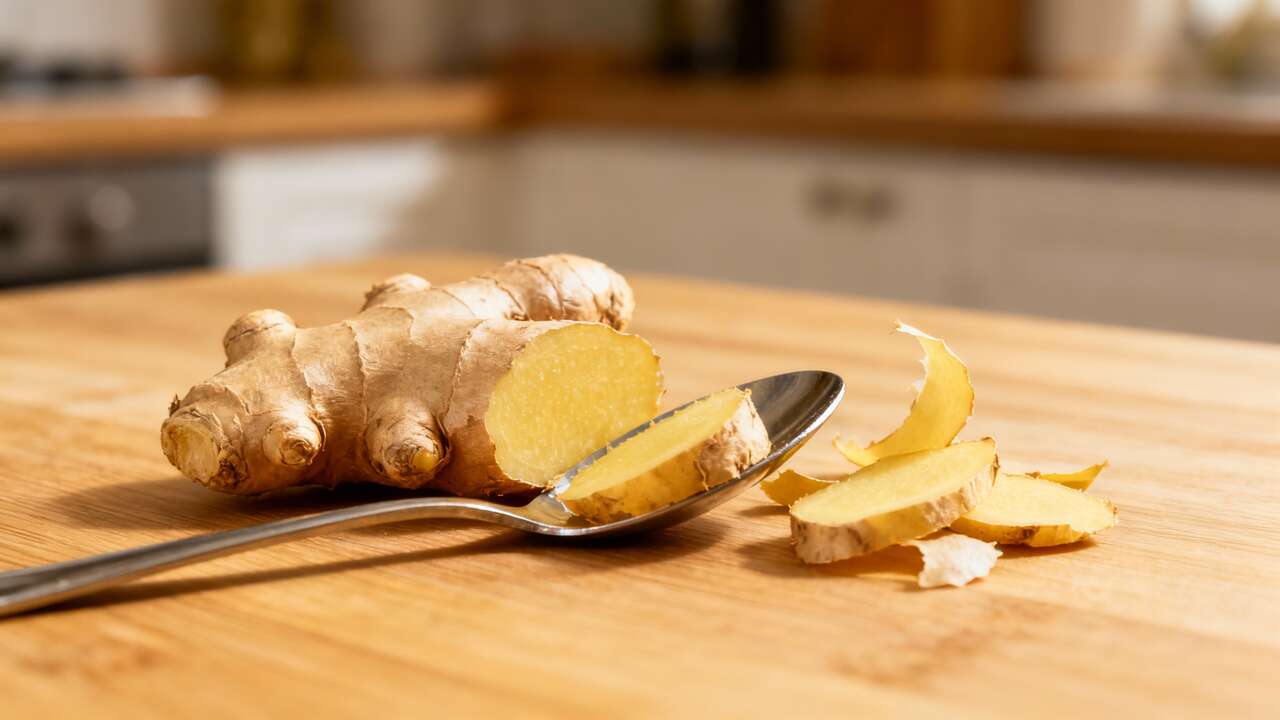

In the culinary world, certain tasks are universally accepted as tedious, and peeling fresh ginger often tops the list. Its gnarled, bumpy surface presents a challenge for standard kitchen tools, leading to frustration and significant waste of its precious, pungent flesh. Many home cooks and professional chefs alike have long sought a better way, a method that preserves the root while efficiently stripping away its papery skin. The solution, it turns out, has been hiding in plain sight, not in the gadget drawer, but among the everyday cutlery. It is a simple, effective technique that transforms a cumbersome chore into a quick, satisfying task.
The Revolutionary Hack for Peeling Ginger
The Humble Spoon: an Unlikely Hero
The most effective tool for peeling ginger is not a high-tech gadget or a specialized blade, but a common metal spoon. This simple utensil, found in every kitchen, is perfectly suited for the unique topography of a ginger root. Unlike a knife or a vegetable peeler, the dull, curved edge of a spoon is designed to remove only the thin skin, leaving the valuable flesh intact. The technique involves using the edge of the spoon to scrape away the peel in short, firm strokes. This method is not only remarkably efficient but also significantly safer than wielding a sharp paring knife against an awkwardly shaped object.
Why it Works so Well
The success of the spoon method lies in the specific properties of ginger skin. The peel is remarkably thin and adheres loosely to the fibrous flesh beneath. A sharp blade easily cuts too deep, taking off a thick layer of the usable root along with the skin. A spoon, however, lacks the sharpness to penetrate the dense flesh. Instead, its edge gets just under the skin, essentially pushing it off. This allows the user to navigate the root’s many knobs and crevices with precision, ensuring that every usable part of the ginger is preserved. The result is a perfectly peeled piece of ginger with minimal waste, ready for any culinary application.
This simple adjustment in tooling fundamentally changes the approach to preparing ginger. Moving away from sharp instruments toward a scraping tool proves to be a more intuitive and effective strategy for this specific task, highlighting how the right technique can often be more important than the complexity of the tool.
Why Avoid the Knife or Peeler
The Problem with Knives
A paring knife is often the first tool cooks reach for when faced with a peeling task. For ginger, however, it is one of the least efficient options. The straight, rigid blade of a knife cannot effectively follow the contours of the bumpy root. To peel the entire surface, one must make a series of flat cuts, essentially squaring off the rounded knobs. This process inevitably carves away a substantial amount of ginger flesh along with the skin. Furthermore, holding a small, irregular root while maneuvering a sharp knife increases the risk of accidental cuts, making it a less safe alternative.
The Limitations of a Vegetable Peeler
A vegetable peeler might seem like a logical step up from a knife, but it shares many of the same drawbacks. While it takes off a thinner layer than a knife, its blade is still designed for the smooth, uniform surfaces of vegetables like carrots or potatoes. When used on ginger, a peeler struggles to navigate the tight corners and bumps. Its blade can easily get clogged with the fibrous skin, requiring frequent cleaning and interrupting the workflow. The end result is often a haphazardly peeled root and a pile of peelings that contain a frustrating amount of wasted ginger.
A Comparative Look at Waste and Efficiency
The difference in performance between these common tools is stark. An objective comparison reveals the clear superiority of the spoon for this particular task. The data underscores not only the reduction in waste but also the improvement in safety and overall ease of use when opting for a spoon over a bladed instrument.
| Tool | Waste Level | Efficiency on Contours | Safety |
|---|---|---|---|
| Paring Knife | High | Poor | Low |
| Vegetable Peeler | Moderate | Fair | Moderate |
| Spoon | Very Low | Excellent | High |
The evidence clearly indicates that while knives and peelers have their place in the kitchen, they are simply the wrong tools for the specific challenge posed by ginger root. Understanding their limitations is the first step toward adopting a more effective method.
The Unexpected Tool for a Perfect Peeling
Choosing the Right Spoon
While almost any standard spoon will outperform a knife, some are better suited for the job than others. The ideal spoon has a relatively thin but sturdy edge. A typical teaspoon or a dessert spoon from a standard cutlery set is usually perfect. Spoons with very thick, rounded lips or overly ornate designs may be slightly less effective, as they offer less of a defined edge for scraping. The material is less important than the shape, though a firm metal spoon provides the necessary rigidity to scrape away the skin without bending.
The Ergonomics of the Spoon Method
Beyond its efficiency, the spoon method offers distinct ergonomic advantages. The grip on a spoon is natural and comfortable, allowing for better control and reducing hand fatigue, especially when peeling larger quantities of ginger. The required motion is a simple scrape, which is less strenuous than the precise slicing required with a knife.
- Natural Grip: Holding a spoon is more intuitive and less taxing on the wrist than pinching a small paring knife.
- Enhanced Control: The scraping motion allows for detailed work around knobs and buds without risking the removal of too much flesh.
- Reduced Force: The technique relies on leverage and scraping rather than sharp force, making it a lower-effort activity.
These ergonomic benefits make the process not just faster and less wasteful, but also more pleasant and accessible for cooks of all skill levels. It transforms a potentially difficult task into a simple, almost therapeutic one.
Simple Steps for Effortless Ginger Peeling
Preparation is Key
Before you begin peeling, a small amount of preparation will make the process even smoother. First, wash the ginger root under cool running water to remove any dirt, and pat it dry with a paper towel. A dry surface provides a better grip. If you are working with a very large piece of ginger with multiple branches, it can be helpful to break it apart into smaller, more manageable knobs along its natural divisions. This gives you smaller pieces to work with, making them easier to hold and maneuver.
The Step-by-Step Scraping Technique
The process itself is straightforward. Hold a piece of ginger firmly in your non-dominant hand. With your other hand, hold a spoon with the bowl facing toward the ginger. Use the tip or the side edge of the spoon to apply firm, steady pressure against the ginger skin. Scrape downwards in short, deliberate strokes, pulling the spoon toward you or pushing it away, whichever feels more comfortable. The skin will come off in thin, papery strips. Continue to rotate the ginger root, scraping all sides and using the tip of the spoon to dig gently into the crevices and nooks between the knobs until the entire piece is clean and pale yellow.
With this simple, repeatable process, peeling even the most gnarled piece of ginger becomes a task of minutes, yielding a perfectly prepared ingredient ready for your recipe.
Additional Tips for Ready-to-Use Ginger
Storing Peeled Ginger
Once peeled, ginger’s flesh is exposed to the air and can begin to dry out or oxidize. To maintain its freshness, proper storage is crucial. For short-term use, place the peeled ginger in an airtight container or a resealable plastic bag and store it in the crisper drawer of your refrigerator. It should remain fresh for up to two weeks. For even longer preservation, some cooks submerge the peeled root in a jar of sherry or vodka, which helps keep it plump and flavorful for several months.
Freezing for Long-Term Use
Freezing is an excellent method for storing ginger long-term. You can freeze the peeled knob whole in a freezer-safe bag. When you need it, simply grate the frozen ginger directly into your dish; there is no need to thaw it first. An even more convenient method is to mince or grate the fresh ginger, portion it into an ice cube tray, top with a little water, and freeze. Once solid, transfer the ginger cubes to a freezer bag. This provides perfectly portioned amounts of ginger ready to be tossed into stir-fries, soups, or smoothies.
Do You Always Need to Peel Ginger ?
While this peeling hack is effective, it is worth noting that peeling is not always necessary. If you are using very young ginger with a thin, delicate skin, you can often skip peeling altogether. Similarly, if the ginger is going to be finely grated into a dish or blended into a smoothie or juice, the skin is often unnoticeable. However, for recipes where ginger is sliced or roughly chopped, or for achieving the smoothest texture in sauces and purées, peeling is highly recommended as the skin can be tough and fibrous.
Knowing how to store and when to peel ginger ensures you get the most out of this versatile root, from the moment you prepare it to its final use in a dish.
Incorporating Peeled Ginger into Your Recipes
Savory Applications
Peeled ginger is a cornerstone of flavor in countless savory dishes across the globe. In many asian cuisines, it forms a foundational aromatic base alongside garlic and onion. Minced or grated, it can be added to marinades for meat and tofu, providing a pungent, warming kick. Sliced ginger is perfect for infusing broths, soups, and stews with its distinctive flavor, and it can be removed before serving. For stir-fries, cutting it into fine matchsticks, or julienning it, ensures it integrates well with other ingredients while providing bursts of flavor.
Sweet and Beverage Uses
Ginger’s versatility extends well beyond savory cooking. Its spicy-sweet profile makes it a popular ingredient in desserts and beverages. It can be grated into cookie dough or cake batter for classic treats like gingerbread and ginger snaps. Simmered with sugar and water, sliced ginger creates a potent syrup perfect for cocktails, sodas, or drizzling over fruit. Of course, one of the simplest and most popular uses is for tea: just steep slices of fresh, peeled ginger in hot water for a soothing and invigorating drink.
A Quick Reference for Ginger Preparations
The way ginger is cut impacts its flavor intensity and texture in a dish. Different preparations are suited for different culinary applications. This table serves as a helpful guide for choosing the right form for your recipe.
| Preparation | Best For | Recommended Tool |
|---|---|---|
| Grated / Puréed | Marinades, dressings, sauces, baked goods | Microplane, grater |
| Minced | Stir-fries, sautés, aromatic bases | Chef’s knife |
| Sliced / Coins | Infusing liquids (broths, teas, syrups) | Mandoline, knife |
| Julienned (Matchsticks) | Garnishes, stir-fries, salads | Chef’s knife |
With a perfectly peeled ginger root at your disposal, a world of culinary possibilities opens up, allowing its unique flavor to shine in a wide array of preparations.
Ultimately, the adoption of the spoon technique for peeling ginger represents a small but significant improvement in kitchen efficiency. This method stands as a testament to the idea that the best solution is often the simplest one. By abandoning less effective tools like knives and peelers in favor of a common spoon, any cook can minimize waste, increase safety, and make the process of preparing this essential ingredient faster and more enjoyable. It is a simple hack that delivers consistently superior results, making it a worthy addition to any cook’s repertoire.

- This Dried Fruit Improves Heart Health, Experts Say - 13 November 2025
- 3 Perennials You Should Divide in Autumn for a Healthier Garden Next Year - 13 November 2025
- This Simple Fruit on the Table Naturally Repels Gnats - 12 November 2025