
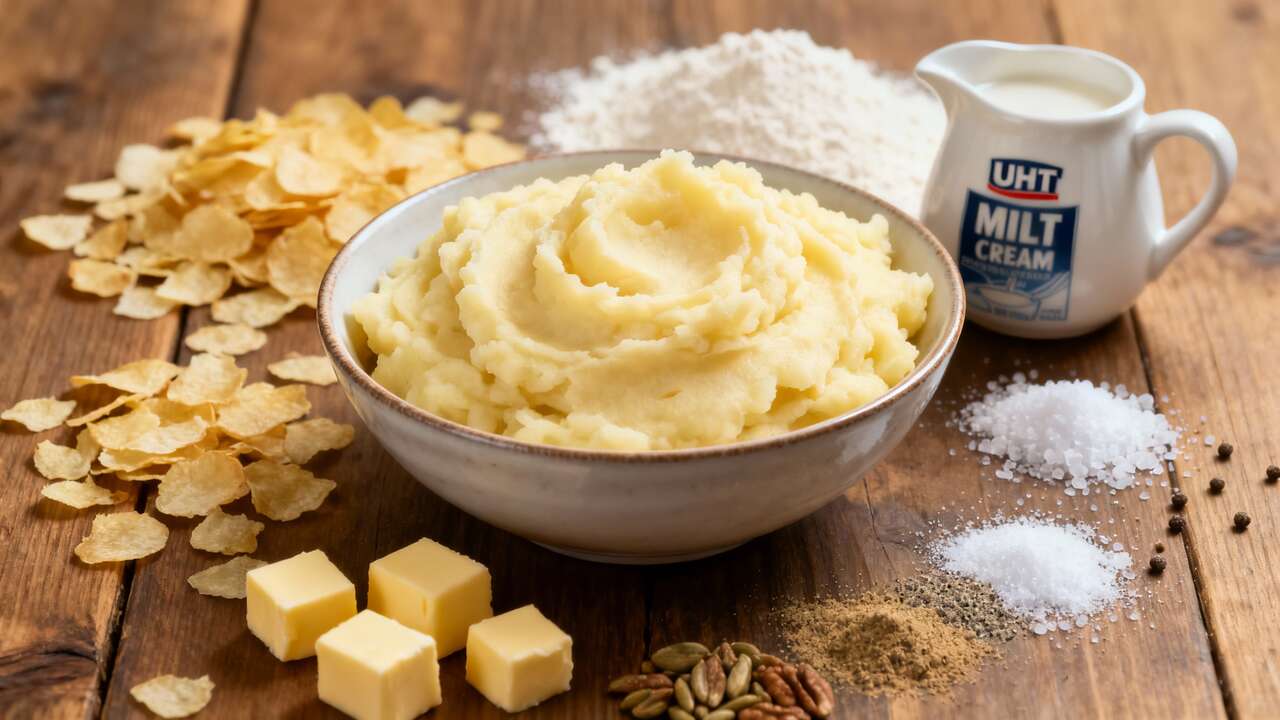

Mashed potatoes. The very words conjure images of comfort, warmth, and holiday feasts. It is the quintessential side dish, a humble yet profound culinary cornerstone that graces tables from simple weekday dinners to the most elaborate celebrations. Yet, for such a seemingly straightforward dish, the path to perfection is fraught with peril. We’ve all experienced the tragic culinary fate of mashed potatoes gone wrong: the gluey, paste-like concoction that sticks to the roof of your mouth; the lumpy, uneven mash that betrays a hasty preparation; or the bland, watery puree that serves only as a flavorless vehicle for gravy. It’s a culinary disappointment that can cast a shadow over an otherwise perfect meal.
But what if I told you there was a simple, almost counterintuitive step that could transform your mashed potato game forever? A technique that guarantees a finished product so impossibly light, so ethereally fluffy, and so luxuriously creamy that it will redefine your very concept of this classic dish. It doesn’t require exotic ingredients or professional-grade equipment that costs a fortune. It requires only a slight shift in your process, a moment of patience that pays off in textural bliss. Forget everything you thought you knew about combining potatoes and dairy. Today, we unlock the secret to the silkiest, most cloud-like mashed potatoes you have ever created. This isn’t just a recipe; it’s a revelation. Prepare to elevate the humble potato to its highest, most glorious form. Your dinner guests will thank you, and you’ll never look back.
10 minutes
15 minutes
facile
€
Ingredients
Utensils
Preparation
Step 1
Begin by preparing your liquid base, which is the heart of this recipe. In a medium saucepan, combine 2 cups of water, the UHT heavy cream, and the unsalted butter. Place the saucepan over medium heat. Your goal here is to gently heat the mixture until the butter is completely melted and the liquid is hot to the touch, with steam rising from the surface. Do not let it come to a rolling boil; you’re looking for a gentle simmer, which is a state just below boiling, characterized by small, gentle bubbles breaking the surface around the edge of the pan. Boiling can cause the milk solids to scorch and alter the flavor.
Step 2
While your liquid is heating, prepare the dry ingredients. In the bowl of your stand mixer, combine the instant potato flakes, the whole milk powder, the fine sea salt, the ground white pepper, and the freshly grated nutmeg. Use a whisk to gently stir everything together. This step is crucial for ensuring that the seasonings are evenly distributed throughout the flakes, which will prevent any single bite from being too salty or bland. An even distribution of the milk powder is also key to achieving a uniformly creamy texture later on.
Step 3
Now for the secret step that makes all the difference. Once your liquid mixture is hot and steaming, carefully pour it all at once over the dry potato flake mixture in the stand mixer bowl. Do not stir. Do not whisk. Do not touch it. Simply cover the bowl with a clean kitchen towel or a lid and let it stand, undisturbed, for 5 to 7 minutes. This is a process called ‘blooming’. Blooming is the process of allowing a dehydrated ingredient, like our potato flakes, to fully absorb liquid and soften before being agitated. This allows every single flake to rehydrate gently and completely, which is the absolute key to preventing a gluey texture. Rushing this step is the most common mistake; patience is your greatest tool here.
Step 4
After the blooming period, uncover the bowl. You will see that the flakes have absorbed the liquid and have a soft, slightly crumbly appearance. Attach the paddle attachment to your stand mixer. Turn the mixer on to its lowest possible speed. Let it mix for just 30 to 45 seconds. The goal is not to whip it aggressively but to gently and thoroughly combine the rehydrated flakes into a cohesive, smooth mass. Over-mixing at this stage is the enemy; it develops the starches and leads to that dreaded gluey consistency. The paddle attachment is ideal because it ‘folds’ the mixture rather than whipping it excessively like a whisk attachment would.
Step 5
Once the potatoes are smooth, stop the mixer. Use a spatula to scrape down the sides and bottom of the bowl to ensure everything is incorporated. Give it one final, gentle stir by hand. Taste the mashed potatoes and adjust the seasoning if necessary. You might want a pinch more salt or a dash more white pepper. Your perfect mashed potatoes are now ready to be served immediately, while they are warm, light, and fluffy.

Chef’s tip
For an incredible depth of flavor, you can infuse your liquids. Before heating, add a few sprigs of thyme, a crushed garlic clove, or a bay leaf to the water, cream, and butter mixture. Let it heat gently, then strain the liquid through a fine-mesh sieve to remove the aromatics before pouring it over the potato flakes. This adds a subtle, savory background note that elevates the entire dish from great to unforgettable.
Wine pairing for a classic side
Mashed potatoes are a wonderfully versatile partner for wine. Their creamy texture and buttery flavor profile pair beautifully with a medium-bodied white wine with good acidity to cut through the richness. An excellent choice would be an oaked Chardonnay from California or Burgundy, France. Its own buttery notes from malolactic fermentation will echo the butter in the potatoes, while its crisp finish cleanses the palate. For red wine lovers, a light-bodied, low-tannin red is the way to go. A Pinot Noir from Oregon or a French Beaujolais-Villages offers bright red fruit flavors and an earthy quality that complements the dish without overpowering it.
A brief history of instant convenience
While the potato was famously championed in France by Antoine-Augustin Parmentier in the 18th century, instant mashed potatoes are a much more recent, and distinctly American, invention. The quest for shelf-stable, easily transportable potato products ramped up during World War II to feed soldiers overseas. Building on earlier research, scientists at the Eastern Regional Research Center, a facility of the U.S. Department of Agriculture, perfected the process of ‘potato granulation’ in the 1950s. The key innovation was a method of cooking and mashing fresh potatoes and then carefully dehydrating them into the flakes or granules we know today. This process was designed to keep the starch cells intact, which is why rehydrating them properly, as we do in this recipe, is so critical to avoiding a starchy, gluey mess. While sometimes looked down upon, high-quality potato flakes are a marvel of food science, capturing the essence of the potato in a convenient, long-lasting form.
- This Dried Fruit Improves Heart Health, Experts Say - 13 November 2025
- 3 Perennials You Should Divide in Autumn for a Healthier Garden Next Year - 13 November 2025
- This Simple Fruit on the Table Naturally Repels Gnats - 12 November 2025