
The quest for the perfect baked potato is a surprisingly complex culinary journey. For many, it’s a dish relegated to the background, often emerging from the oven with either a leathery, tough skin or a disappointingly soggy exterior. It’s a simple food, yet achieving that coveted combination of a crispy, salty crust and a light, fluffy interior often feels like a matter of luck. Recently, however, a specific, science-driven method from a celebrated culinary figure has taken the internet by storm, promising to deliver a perfect result every time. This technique, shared widely across social media platforms and food blogs, has sparked a wave of home cooks putting it to the test, with many declaring it a definitive game-changer.
Alton Brown’s Method: a Culinary Revolution
A Scientific Approach to a Classic Dish
What sets this particular method apart is its foundation in food science. The chef behind it is renowned for deconstructing classic recipes to understand the chemical and physical reactions at play. His approach to the baked potato is no different. It isn’t merely a list of instructions; it’s a carefully calibrated formula designed to manipulate starch and moisture to produce a specific, predictable outcome. Every step, from the choice of potato to the final moments in the oven, serves a distinct purpose. This transforms the humble act of baking a potato into a precise, almost scientific, procedure. It moves beyond culinary tradition and into the realm of applied chemistry, promising results that are not just good, but consistently exceptional.
Why It’s More Than Just Baking
This technique challenges the common, casual approach to baked potatoes. Wrapping the potato in foil, for instance, is strictly forbidden, as it traps steam and effectively steams the potato in its own skin, leading to a soft, wet exterior. Instead, this method champions direct, dry heat. The multiple piercings are not just a token gesture; they are crucial exit points for internal steam, preventing the interior from becoming dense and waterlogged. The high-temperature bake is engineered to dehydrate the skin rapidly, creating that signature crispiness while the starchy inside cooks to a perfect, floury consistency. It’s a masterclass in controlling the cooking environment to achieve textural perfection.
Now that the underlying principles of this revolutionary approach have been established, it’s time to examine the specific ingredients and preparation steps that form the foundation of this celebrated recipe.
Ingredients and Preparation: the Recipe for the Perfect Potato
The Star of the Show: the Russet Potato
The success of this recipe begins with a crucial choice: the potato itself. The method explicitly calls for a russet potato, and for good reason. Russets are characterized by their high starch content and low moisture level, a combination that is essential for achieving a fluffy, cottony interior. When baked, the starch granules in a russet swell and separate, creating a light, airy texture that other, waxier potatoes simply cannot replicate. The creator of this method advises selecting large, uniform potatoes, humorously noting that “if it looks like Mr. Potato Head, it’s the right one.” This isn’t about aesthetics; a larger potato provides a better ratio of crispy skin to fluffy flesh.
The Supporting Cast: Oil and Salt
While the potato is the main event, two other ingredients play critical roles. After an initial bake, the potato is coated in a neutral oil, like canola or grapeseed, and coarse salt. The oil is not for flavor but for function. It helps conduct heat more efficiently across the skin’s surface during the final, higher-temperature phase of baking, essentially frying the exterior to a deep, golden crisp. The coarse salt, such as kosher or sea salt, does more than just season; it helps draw out the last traces of moisture from the skin, further enhancing its crunch and creating a savory crust that is delicious in its own right.
The Crucial Prep Work
Before the potato ever sees the inside of an oven, a few preparatory steps must be followed meticulously. Failure to do so can compromise the final result, turning a potentially perfect potato into a mediocre one.
- Washing and Scrubbing: The potato must be washed under cold running water and scrubbed thoroughly with a stiff brush. This removes any dirt and prepares the skin to be eaten.
- Drying Completely: This is a non-negotiable step. The potato must be dried with a clean towel until its surface is completely free of moisture. A wet potato will steam, not bake, resulting in a soft skin.
- Piercing Generously: Using a fork, the potato should be pierced deeply about 10 to 12 times on all sides. These perforations allow internal steam to escape during cooking, which is vital for preventing a gummy texture and, in rare cases, a potato explosion in the oven.
With the potato meticulously selected and prepared, the focus shifts to the most critical stage of the process: the bake, where precise temperature control and technique are paramount to success.
Oven Baking: secrets to an Ideal Texture
The Two-Phase Heat Doctrine
This method employs a clever two-stage baking process to achieve its signature texture. First, the prepped potato is baked in a preheated oven at a moderate temperature, typically 350°F (175°C), for about an hour. This initial phase is designed to cook the interior slowly and evenly, gelatinizing the starches without burning the skin. After this first bake, the potato is removed, coated with oil and salt, and then returned to the oven at a higher temperature, around 400°F (200°C), for another 10 to 15 minutes. This final blast of high heat is what transforms the skin into a crispy, crackling shell.
Direct-on-the-Rack Technique
Another key to this recipe’s success is the placement of the potato in the oven. It should be placed directly on the middle oven rack, not on a baking sheet or pan. This allows hot air to circulate freely and evenly around the entire surface of the potato. Placing it on a pan would cause the bottom to steam and become soggy where it makes contact with the hot metal. This 360-degree exposure to dry heat is essential for developing a uniformly crisp skin all the way around. It’s a simple adjustment that makes a world of difference.
Timing is Everything
While the recipe provides general guidelines, the exact cooking time can vary based on the size of the potato. A perfectly baked potato should have an internal temperature of around 205°F to 212°F (96°C to 100°C). A simple way to check for doneness is to pierce it with a fork; if it slides in with no resistance, the potato is ready.
| Potato Size | Approximate Initial Bake Time (at 350°F) | Final Bake Time (at 400°F) |
|---|---|---|
| Medium (8-10 oz) | 50-60 minutes | 10 minutes |
| Large (12-14 oz) | 60-75 minutes | 10-15 minutes |
| Extra Large (16+ oz) | 75-90 minutes | 15 minutes |
The theory behind the method is undeniably sound and the steps are clear, but the ultimate test lies in its real-world application. I decided to follow the procedure to the letter to see if it truly lives up to its legendary reputation.
My Experience with the Alton Brown Method
First Impressions and the Process
Embarking on this potato-baking journey, I was struck by the recipe’s elegant simplicity. With only a russet potato, oil, and salt, the focus remains squarely on technique. I followed each step with precision: scrubbing, drying meticulously, and piercing the potato as instructed. Placing it directly on the oven rack felt counterintuitive, but I trusted the process. As it baked, a comforting, earthy aroma filled the kitchen. After the first hour, I carefully removed the hot potato, brushed it with canola oil, sprinkled it generously with coarse sea salt, and returned it to the hotter oven. The anticipation during those final 10 minutes was palpable.
The Moment of Truth: a Textural Triumph
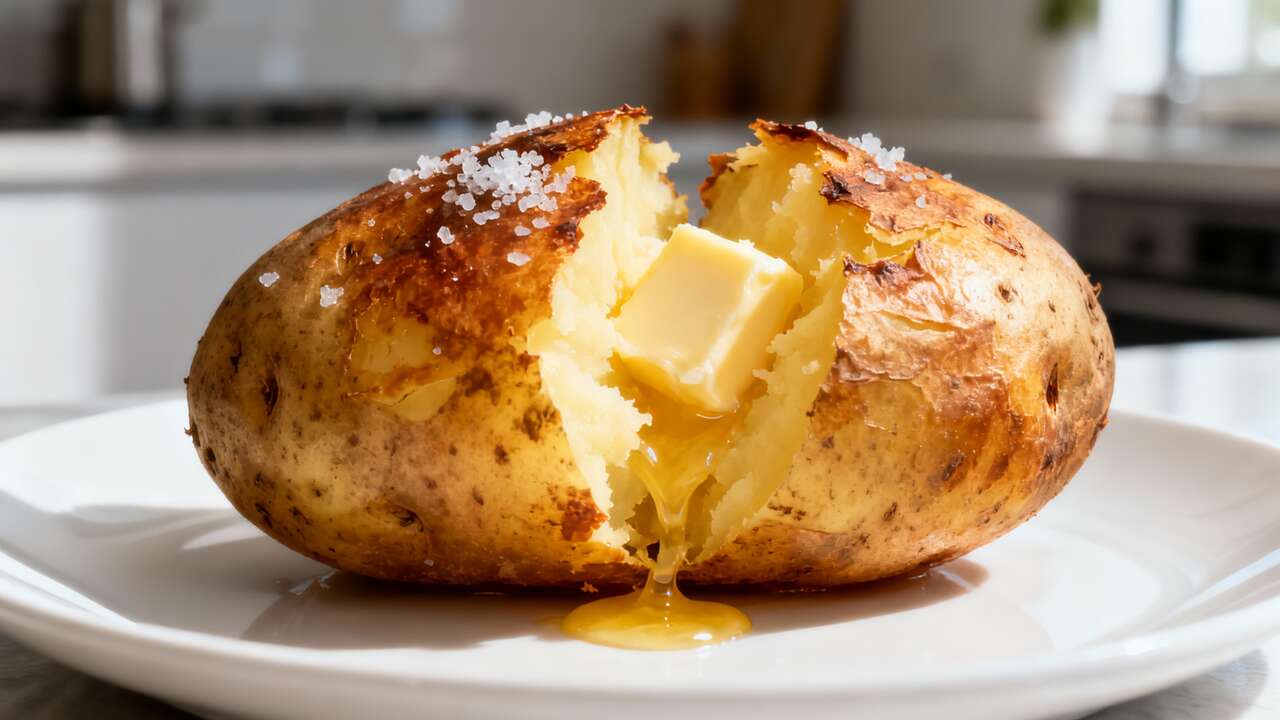
The result was nothing short of revelatory. The potato emerged from the oven with a deeply browned, rugged-looking skin that crackled audibly under the pressure of a knife. Slicing it open released a plume of steam, revealing an interior that was astonishingly light and fluffy. The contrast between the shatteringly crisp, salty skin and the soft, cloud-like flesh was extraordinary. It was, without exaggeration, the best baked potato I have ever made at home. Each bite was a perfect marriage of textures, transforming a humble side dish into something truly special. It made all my previous attempts—often resulting in dense, leathery potatoes—seem like a distant, sad memory.
Acknowledging the Pitfalls
Despite my success, it’s important to note the mixed feedback found online. Some users have reported failures, describing outcomes that were far from the promised perfection. After experiencing the method firsthand, it’s clear that success hinges on adherence to the details. A likely culprit for failure is insufficient drying of the potato skin, which would inhibit crisping. Using the wrong type of potato, like a waxy red or Yukon gold, would also lead to a dense, creamy interior rather than a fluffy one. Even slight deviations from the prescribed oven temperatures or techniques could derail the entire process, proving that while the recipe is simple, it is not foolproof.
My own successful trial aligns with the massive online enthusiasm, which raises an interesting question: what is it about this particular recipe that has resonated so strongly with so many home cooks across the internet ?
Why Does This Recipe Take the Internet by Storm ?
The Appeal of Perfected Simplicity
At its core, the recipe’s viral popularity stems from its ability to elevate a common, often overlooked food into something spectacular using accessible ingredients and techniques. It demystifies the process of achieving culinary excellence. For many home cooks, a baked potato is a throwaway side dish. This method reframes it as a craft. It empowers people by showing them that with a little knowledge and attention to detail, they can produce restaurant-quality results in their own kitchens. It’s a recipe that delivers a high reward for a relatively low effort, which is a powerful combination.
The Power of a Trustworthy Source
The chef behind the recipe has cultivated a reputation for being a meticulous and reliable source of culinary information. His fans and followers trust that his methods are not based on whims or old wives’ tales, but on rigorous testing and a deep understanding of food science. When he presents a “definitive” way to do something as basic as baking a potato, people listen. This credibility encourages cooks who may have been disappointed by other recipes to give it another try, confident that this time, the results will be different. The recipe’s success is as much a testament to his reputation as it is to the technique itself.
Visual and Viral Appeal
In today’s visually-driven social media landscape, this baked potato is a star. The dramatic contrast in textures is not just delicious, it’s highly photogenic and “shareable.” Videos showcasing the crackle of the skin as it’s broken open or the steam billowing from the fluffy interior are incredibly satisfying to watch. This has created a viral loop: people see the amazing results online, they try the recipe themselves, they share their own success story, and the cycle continues. The method’s effectiveness compared to common mistakes is stark.
| Technique Element | This Method’s Approach | Common Mistake | Resulting Difference |
|---|---|---|---|
| Wrapping | No foil, direct heat | Wrapping in aluminum foil | Crispy skin vs. Steamed, soggy skin |
| Potato Choice | High-starch russet | Using waxy potatoes | Fluffy interior vs. Dense, creamy interior |
| Placement | Directly on oven rack | On a baking sheet | Evenly crisp vs. Soggy bottom |
The widespread discussion and countless visual testimonials across digital platforms confirm that this is far more than just a fleeting food trend; it’s a new standard for a beloved classic.
In Summary: the Ultimate Baked Potato You Must Try
Is It Really the Best ?
While culinary perfection can be subjective, the principles underpinning this baked potato method are objectively sound. For anyone who values texture and has longed for a baked potato with a genuinely crispy skin and an ethereal, fluffy interior, this recipe is an absolute must-try. While success is not guaranteed without careful attention to the steps, those who follow the instructions faithfully are very likely to be rewarded with what could be the best baked potato of their lives. It sets a new benchmark for what a simple potato can be.
Final Thoughts on a Culinary Classic
Ultimately, this recipe does more than just teach you how to cook a potato. It serves as a powerful reminder that understanding the “why” behind cooking techniques is the key to unlocking extraordinary results from ordinary ingredients. It transforms a simple, rustic side dish into a potential centerpiece of a meal, worthy of admiration. The technique is a testament to the idea that with a bit of science and care, even the most humble foods can become a culinary masterpiece.
This celebrated method for baking potatoes delivers on its promise, providing a clear, science-backed path to achieving textural perfection. By focusing on the right ingredients and a precise technique, it turns a simple staple into a standout dish. For any cooking enthusiast, mastering this recipe is not just about making a better potato; it’s about adding a reliable and impressive technique to one’s culinary arsenal.

- This Dried Fruit Improves Heart Health, Experts Say - 13 November 2025
- 3 Perennials You Should Divide in Autumn for a Healthier Garden Next Year - 13 November 2025
- This Simple Fruit on the Table Naturally Repels Gnats - 12 November 2025